

Computational Cardiology with LHMF and Digital Twin
LHMF’s Core Functionalities and Applications
The Longitudinal Hemodynamic Mapping Framework (LHMF) is a significant advancement in cardiovascular healthcare, offering a paradigm shift towards proactive care. Unlike traditional methods that react to symptoms after they manifest, LHMF aims to predict and prevent cardiovascular events like heart attacks and strokes. It provides a more comprehensive and continuous understanding of cardiovascular health than traditional methods, which are often limited to short-term assessments.
Here’s a breakdown of LHMF’s core functionalities and applications:
Core Functionalities:
● High-Fidelity Long-Term Simulations: LHMF leverages high-performance computing (HPC) to perform real-time, three-dimensional (3D) simulations of the cardiovascular system over millions of heartbeats. This granularity allows LHMF to capture subtle hemodynamic changes that traditional, short-term models might miss. LHMF relies on the Navier-Stokes equations, which describe fluid motion, to model blood flow. It solves these complex equations using a sophisticated numerical technique called the high-order Discontinuous Galerkin (DG) method, which is adept at handling intricate vascular geometries and accurately representing complex flow patterns.
● Real-Time Data Integration: LHMF integrates real-time data from wearable sensors, such as those measuring ECG, blood pressure, oxygen saturation (SpO2), and physical activity. This integration allows the model to dynamically adapt to the patient’s changing physiological state, providing personalized insights. LHMF utilizes the Kalman filter, a statistical technique, to combine model predictions with sensor data, ensuring accurate and patient-specific insights. The real-time data integration and Kalman filtering make the simulations more dynamic and responsive to individual patient conditions.
● Immersive Visualization: LHMF can be integrated with virtual reality (VR) technology, allowing healthcare providers to visualize the patient’s cardiovascular system in 3D, observe blood flow dynamics, and simulate various interventions. This immersive experience enhances diagnostic understanding, treatment planning, patient education, and medical training.
Applications:
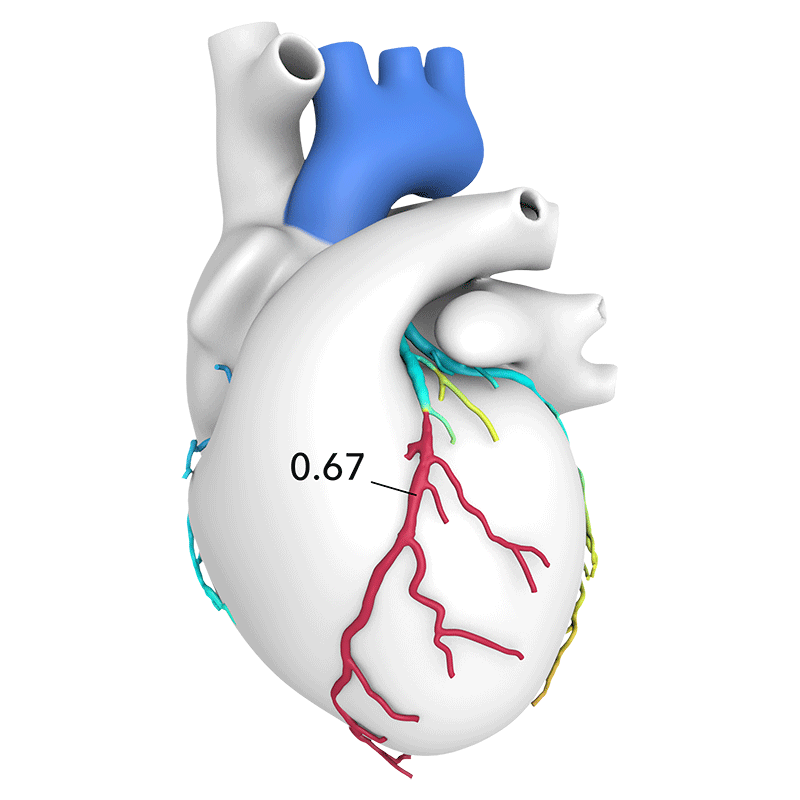
● Predicting Fractional Flow Reserve (FFR): FFR is a key metric for evaluating the severity of artery narrowing (stenosis). LHMF can non-invasively predict FFR, potentially reducing the need for invasive procedures.
● Optimizing Stent Design and Deployment: LHMF assists in evaluating different stent designs and deployment strategies. Simulations can assess how stent parameters affect blood flow dynamics, ultimately guiding the development of stents that are less likely to cause complications.
● Understanding Coronary Artery Disease (CAD) Progression: LHMF provides a deeper understanding of how blood flow dynamics relate to CAD progression. By mapping Wall Shear Stress (WSS), the frictional force exerted by blood flow on vessel walls, LHMF can identify areas vulnerable to plaque buildup and potential rupture. WSS analysis can be used to guide stent selection and placement for optimal hemodynamic outcomes.
● Personalized Treatment Strategies: LHMF allows for the creation of “digital twins,” which are virtual representations of a patient’s cardiovascular system. These digital twins can be used to simulate the potential outcomes of different treatment approaches, such as medication, stenting, or bypass surgery. This personalized modeling allows clinicians to develop treatment plans tailored to the individual patient, potentially improving efficacy and minimizing adverse events.
● Early Disease Detection: LHMF’s continuous monitoring and high-fidelity simulations enable it to detect subtle changes in hemodynamic parameters that might indicate early signs of disease. This early detection is crucial for timely interventions and potentially preventing the progression of cardiovascular disease.
Future Directions:
● Integrating Machine Learning: Machine learning can enhance LHMF’s predictive capabilities by identifying patterns and trends in patient data. This integration could help automate model parameterization and personalize treatments further.
● Quantum Computing: The immense processing power of quantum computing could significantly speed up LHMF simulations, potentially allowing for even more detailed and complex models.
● Multi-Modal Data Integration: Incorporating data from genetics, lifestyle factors, electronic health records (EHRs), and medical imaging would make LHMF’s digital twins even more comprehensive and personalized.
Limitations:
While LHMF shows great promise, it is important to acknowledge its current limitations:
● Data Quality: The accuracy of LHMF simulations depends on the quality of input data. Noise and gaps in data from wearable sensors can impact simulation reliability.
● Computational Demands: High-fidelity simulations require significant computational resources. This can be a barrier to widespread adoption, especially in resource-limited settings.
● Ethical and Privacy Considerations: As LHMF involves collecting and analyzing sensitive patient data, ensuring data security and privacy is paramount.
Conclusion:
LHMF is at the forefront of a new era in cardiovascular healthcare, moving from reactive to proactive and personalized approaches. Continuous research and development are crucial to address LHMF’s limitations and unlock its full potential for improving patient outcomes and creating a healthier future.