

Attention Language Models for Medical Diagnosis
Part I:
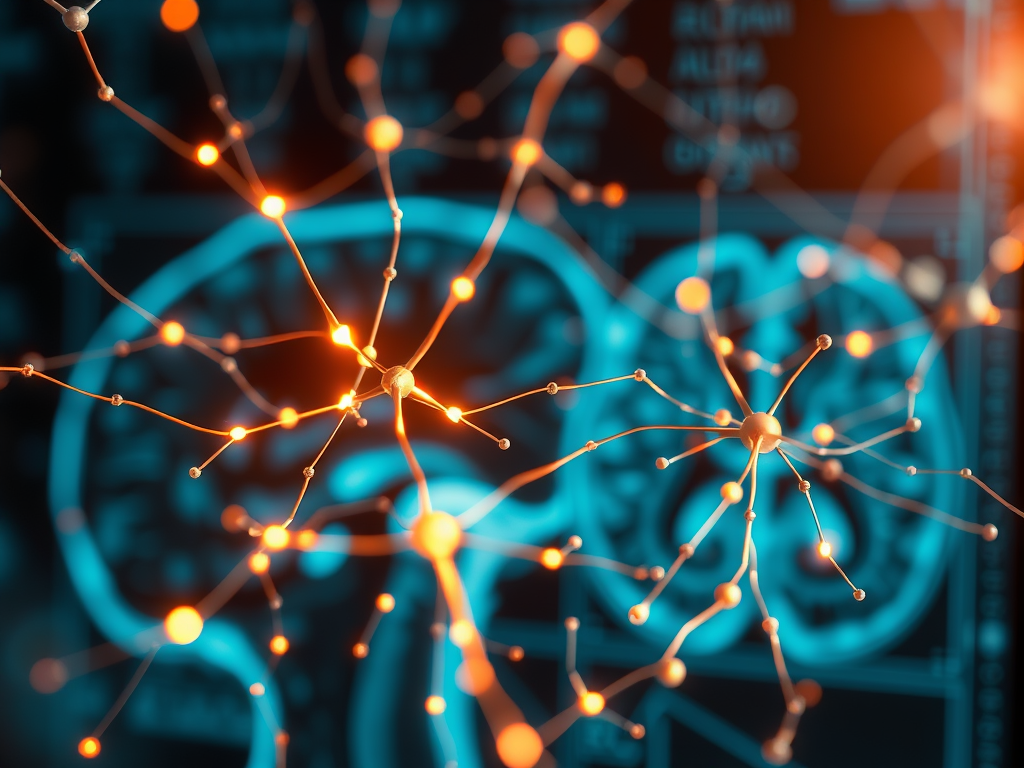
A key concept in AI is the idea of creating a computational model that mimics the function of biological neurons. Inputs, which are analogous to signals received by a neuron’s dendrites, are processed by the neuron and result in an output. These artificial neurons can be connected to form a neural network. A neural network is typically organized into layers that include an input layer, hidden layers, and an output layer. Connections between neurons are assigned weights that determine the strength of the connection. These weights are adjusted during the training process to optimize the network’s performance. A neural network is trained using a process called supervised learning. This process involves feeding the network labeled examples, where an input is paired with its corresponding label or target output. For instance, a medical image might be paired with a specific diagnosis. During training, the network’s internal parameters are iteratively adjusted to reduce the discrepancy between the network’s predicted output and the true label. Inference refers to the process of using a trained model to make predictions on new data.
Deep learning is particularly important in medical diagnosis. DL, which employs deep neural networks, is particularly well-suited for analyzing complex medical images and extracting relevant features. Attention language models, such as GPT-4, are built on a transformer architecture, which uses a mechanism called attention. Attention allows the model to assign different weights to different parts of the input text during the output generation process. This ability is essential for grasping the context and relationships between words in a sentence or paragraph. In the context of medical diagnosis, attention is extremely beneficial because it enables AI to focus on the most pertinent details within complex medical texts.
Visualizing these attention weights can provide insights into how the model is interpreting the text. An attention matrix is commonly used to visualize attention. This matrix illustrates the attention weights between all pairs of words in a given input sequence. Multi-head attention employs multiple attention mechanisms, each of which calculates its own set of attention weights. This is comparable to having multiple experts, each concentrating on a distinct facet of a problem. By visualizing the attention patterns of each head, we gain a deeper understanding of the model’s internal workings and how it combines different perspectives to achieve a more nuanced understanding of complex medical language. visualizations can offer insights into how AI models work, it is critical to interpret them cautiously because attention weights do not necessarily directly correspond to human-interpretable ideas such as ‘importance’ or ‘relevance’.
A promising use for attention language models is the analysis of clinical notes and medical text. These notes, which are typically written by doctors, are a rich source of diagnostic information. However, manually reviewing them can be a time-consuming process. AI-powered NLP tools can automate the process of extracting key information from these notes, such as symptoms, diagnoses, medications, and treatment plans.
AI key applications:
● Medical Imaging
● Patient History and Risk Prediction
● Genomics and Personalized Medicine
● Mental Health Diagnosis
The application of attention language models to analyze clinical notes has a number of advantages over manual review. AI models can be trained to recognize subtle patterns and relationships in text that humans might miss. Additionally, AI can help reduce the risk of errors and improve the efficiency of clinical note analysis.
Diabetic retinopathy (DR) is a major cause of blindness worldwide. AI-powered image analysis, in conjunction with attention mechanisms, can improve the accuracy and efficiency of DR screening. This works by training the AI model to concentrate on the most relevant parts of an image. For instance, in the case of DR screening, this could entail focusing on lesions while ignoring irrelevant areas. A multimodal approach, which combines data from both images and text, can result in an even more accurate diagnosis. In the case of DR screening, this might mean combining the insights gained from analyzing retinal images with data extracted from patient histories and clinical notes.
AI can also enhance the detection and management of anemia by analyzing patient history and lab reports. This involves using attention language models to identify risk factors and to enable predictive modeling. For osteoarthritis (OA), AI offers potential for early detection and prediction through the use of image analysis, NLP, and predictive modeling.
The increasing use of AI in medical diagnosis raises several ethical concerns:
● Data Privacy and Security
● Bias and Fairness
● Transparency and Explainability
● Responsibility and Accountability
● Human Oversight and Control
● Informed Consent
Part II:
The video describes a controlled vocabulary algorithm for medical diagnosis. This algorithm prioritizes precision and accuracy in medical terminology to ensure diagnoses are consistent, reproducible, and interoperable across healthcare systems. The algorithm uses a strict set of rules to eliminate ambiguity, unlike fuzzy matching or approximate techniques.
Here is a breakdown of the components and steps:
Components of the Algorithm:
Standardized Medical Terminologies: The algorithm utilizes a database built upon established medical ontologies and coding systems such as SNOMED CT, ICD-10, and MeSH. These systems provide a lexicon of terms that minimizes ambiguity.
Hierarchical Coding Structure: Medical terms are organized in a hierarchical manner, allowing for categorization from general to specific. This structure enables diagnosis matching at varying levels of specificity.
Contextual Disambiguation: The algorithm analyzes the context in which a term is used to distinguish between terms with multiple meanings. For example, “sore throat” can refer to various conditions like viral pharyngitis, bacterial pharyngitis, or an allergic reaction. By considering patient data like symptoms, medical history, and lab results, the algorithm can accurately pinpoint the diagnosis.
Steps in the Algorithm:
Input Processing: The algorithm receives structured patient data, including symptoms, medical history, and diagnostic tests.
Term Normalization: Input terms are normalized to ensure consistency by removing variations and synonyms.
Hierarchical Matching: The algorithm searches for the most relevant terms in the vocabulary database, using a hierarchical approach for precise diagnosis matching.
Contextual Analysis: Contextual disambiguation is performed to ensure the chosen terms accurately represent the clinical scenario.
Output Generation: The algorithm produces a definitive diagnosis with the corresponding standardized code for integration into the patient’s medical record.
The algorithm also includes:
Exact Matching: The algorithm uses exact matching instead of approximate matching techniques like fuzzy logic to ensure precision and eliminate ambiguity.
Term Disambiguation: A disambiguation module uses patient context, like age, gender, and medical history, to select the correct diagnosis from multiple possibilities.
Hierarchical Diagnostic Coding: Diagnoses are categorized hierarchically, enabling the system to move from broad to specific terms, ensuring diagnostic specificity.
Validation and Error Checking: The system validates inputs, checks for completeness, and flags invalid or unrecognized terms.
Error Handling and Feedback: In case of a mismatch, the system provides specific error messages and suggests valid alternatives from the controlled vocabulary without resorting to automatic fuzzy matching.
Benefits of the Controlled Vocabulary Algorithm:
Enhanced Precision: Standardized terminology reduces ambiguity and enhances diagnostic accuracy.
Improved Interoperability: Globally accepted coding systems facilitate seamless communication and data exchange.
Streamlined Workflow: Automation reduces manual work, easing the burden on healthcare professionals.
Data Analytics and Research: The structured data can be used for research and analytics, contributing to medical advancements.
In essence, the controlled vocabulary algorithm aims to provide a structured, unambiguous, and precise approach to medical diagnosis automation, ultimately contributing to improved healthcare outcomes.
Live Presentation at the International Summit of Artificial Intelligence, La Royal, Amman, Jordan, 2023
The presentation is available in 6 languages
You can convert ” video content “ into other languages in minutes while preserving all the original voices. Here is how you can do this:
Step 1: → Go to http://virbo.wondershare.com/app/video-translate…
Step 2: → Sign up for a free account → Upload video file
Step 3: → Select original language & target language Voice
Step 4: → Click on the button “translate this video”
Step 5: → Now let’s just AI do the rest