

Man Computer Symbiosis
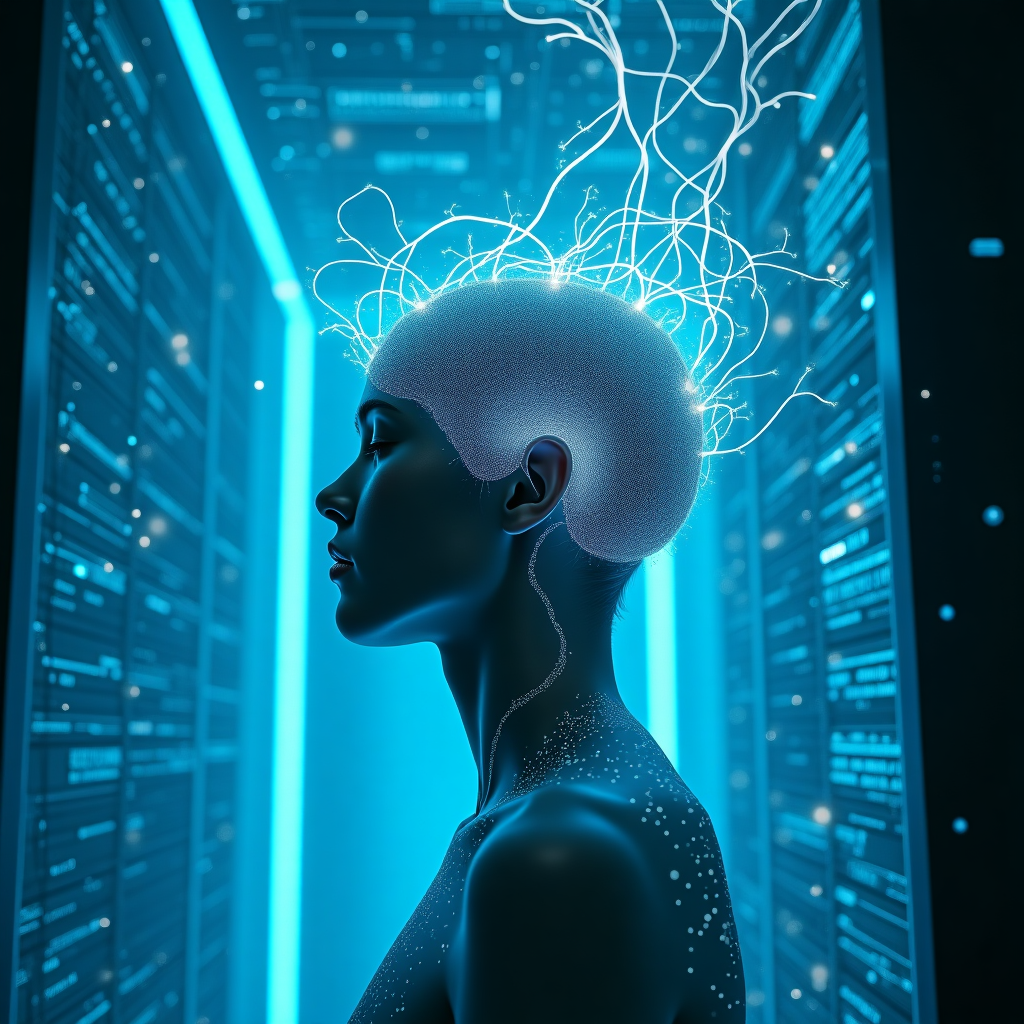
A Look at Licklider’s Vision in the Age of AI
This summary explores J.C.R. Licklider’s vision of man-computer symbiosis, as outlined in his 1960 paper, and examines how modern AI technologies are bringing us closer to realizing that vision.
Licklider’s Vision: Humans and Computers Working as Partners
In 1960, J.C.R. Licklider presented the concept of man-computer symbiosis in his paper “Man-Computer Symbiosis”. At a time when computers were primarily seen as tools for enhancing physical capabilities, Licklider envisioned a future where computers and humans would work together in a deeper, more integrated partnership. His vision proposed that computers would augment human intellect, not merely extend physical capabilities. Licklider imagined computers helping humans with tasks such as problem formulation, decision-making, and learning. This partnership would leverage human creativity and machine precision to solve complex problems.
Modern AI: Making Licklider’s Vision a Reality
Today, rapid advancements in artificial intelligence (AI) are making Licklider’s vision more attainable. Technologies like Large Language Models (LLMs), advanced computer vision, and human-computer interfaces are facilitating new forms of collaboration between humans and machines. These technologies are not just enhancing human capabilities but are also enabling complex problem-solving, real-time decision-making, and creative idea generation.
Realizing Licklider’s Goals: Formative Thinking and Real-Time Collaboration
Licklider’s vision centered on two main goals: facilitating formative thinking and enabling real-time collaboration. Let’s look at how modern AI technologies are addressing these goals:
Facilitating Formative Thinking
Formative thinking involves generating, refining, and organizing ideas. Today’s AI, especially LLMs like GPT-4, shows significant potential in this area.
- Hypothesis Generation: LLMs can quickly generate a wide range of hypotheses and explore solution spaces. However, the quality of these outputs can vary, and LLMs may sometimes produce irrelevant or nonsensical suggestions.
- Information Synthesis: LLMs can act as research assistants, processing large amounts of data to extract insights. However, they rely on training data, which can introduce biases or lead to outdated conclusions.
- Iterative Refinement: AI can provide feedback loops that refine problem formulations, but it lacks deep contextual understanding and awareness of human intent.
Enabling Real-Time Collaboration
AI systems are becoming increasingly adept at collaborating with humans in real-time, dynamic environments. Here are a few examples:
- Interactive Problem Solving: AI systems can dynamically respond to human input, aiding in the exploration of new solutions, particularly in fields like scientific research.
- Dynamic Data Visualization: AI-powered systems can visualize complex data, highlighting correlations and anomalies, especially in time-sensitive areas such as finance and healthcare.
- Collaborative Decision-Making: Reinforcement learning systems can offer real-time, data-driven recommendations in critical situations. However, these systems lack common-sense reasoning.
Licklider’s Prerequisites: Meeting Them with Current Technology
Licklider outlined several prerequisites for achieving man-computer symbiosis. Here’s a look at how 2024 technology is addressing them:
- Time-Sharing and Resource Allocation: Cloud computing and virtualization have surpassed Licklider’s time-sharing vision. Platforms like AWS and edge computing provide scalable access to resources. However, challenges remain in resource allocation and decentralization.
- Memory Hardware and Organization: Modern hardware, including SSDs and NVMe storage, allows for rapid data access, which is essential for today’s AI. Data indexing technologies like FAISS enable fast retrieval of vector data. However, data sovereignty laws present governance challenges.
- Advanced Input/Output Modalities: AI-powered technologies like natural language processing (NLP), gesture recognition, and augmented reality have revolutionized human-computer interaction. Despite these advances, AI still struggles with context-awareness and emotional intelligence.
- High-Level Programming Languages and Tools: High-level languages and tools such as TensorFlow, PyTorch, and AutoML have made AI development more accessible. [8] No-code/low-code platforms are increasingly enabling non-experts to deploy AI systems. However, the complexity of these systems still presents a barrier to full symbiosis.
Challenges and Future Directions
While significant progress has been made towards realizing Licklider’s vision, several challenges remain:
- Explainability and Trust in AI Systems: AI’s “black-box” nature can limit transparency and trust, especially in critical applications. Explainable AI (XAI) techniques, such as LIME and SHAP, aim to provide explanations for AI decisions. However, achieving real-time interpretability is still a challenge.
- Robustness and Reliability: AI systems are susceptible to adversarial attacks and performance issues when faced with unexpected inputs. Adversarial training and robust optimization techniques attempt to address these risks, but edge cases still pose significant reliability issues.
- Ethical Considerations: Algorithmic bias, data privacy, and the concentration of power are key ethical concerns related to AI. Responsible AI development frameworks aim to mitigate these issues, ensuring fairness, transparency, and accountability in AI systems.
- Evolving Role of Humans: The role of humans is changing as AI becomes more capable. Human creativity, empathy, and ethical judgment are still crucial. However, careful consideration is needed to define the boundaries of AI autonomy. Preserving human agency and control over AI systems is essential for establishing a meaningful collaboration.
Emerging Applications and Long-Term Implications
Man-computer symbiosis is finding applications in a growing number of fields, each with its own set of implications:
- Scientific Discovery: AI is accelerating scientific discovery, as seen in systems like AlphaFold in biology. Future AI systems could autonomously design experiments and generate new knowledge.
- Healthcare: AI is improving diagnostic accuracy and enabling personalized treatments. However, concerns about bias and data privacy require careful consideration as AI becomes more integrated into healthcare systems.
- Creative Arts: AI-generated art and literature, exemplified by tools like DALL-E, are reshaping creative industries. Questions about authorship, originality, and creativity persist as AI’s role in these fields becomes increasingly collaborative.
- Education: AI-powered personalized learning platforms are transforming education. Future AI systems could deliver tailored, lifelong learning experiences, bridging gaps in access to education.
Conclusion
Licklider’s vision of man-computer symbiosis is becoming increasingly relevant as AI technologies advance. While modern AI systems have made substantial progress, challenges in areas like explainability, robustness, and ethics need to be addressed. As AI becomes more integrated into various domains, maintaining a focus on human agency and control will be key to achieving genuine symbiosis. By addressing these challenges, we can unlock the full potential of human-computer partnerships and usher in a new era of collaboration.